
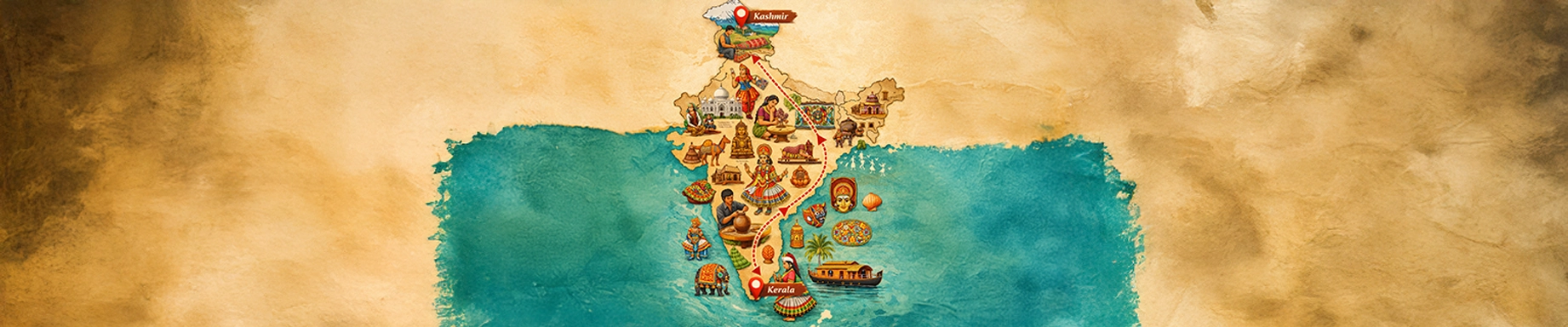
India’s craft heritage is not merely confined to a museum shelf or a page in a history textbook – it is very much alive in the villages, homes and hands across the country. From the quiet valleys of Kashmir to the sun-soaked coasts of Kerala, centuries-old art forms continue to survive through skill, resilience, and devotion. Each one of these comes alive at Khwahiish in the form of a collective heritage that is made possible by 150 artisans and 20+ art forms, carried across generations and regions.
Khwahiish was built on the premise that crafts are essentially the geography with a soul. Each form of art is inextricably linked to the land of its origin, shaped by the climate, culture, rituals, and day-to-day lives of that land. To chart the crafts of Khwahiish is not merely a geographical exercise but one that involves grasping the intersections of identity, histories, and creativity across India.
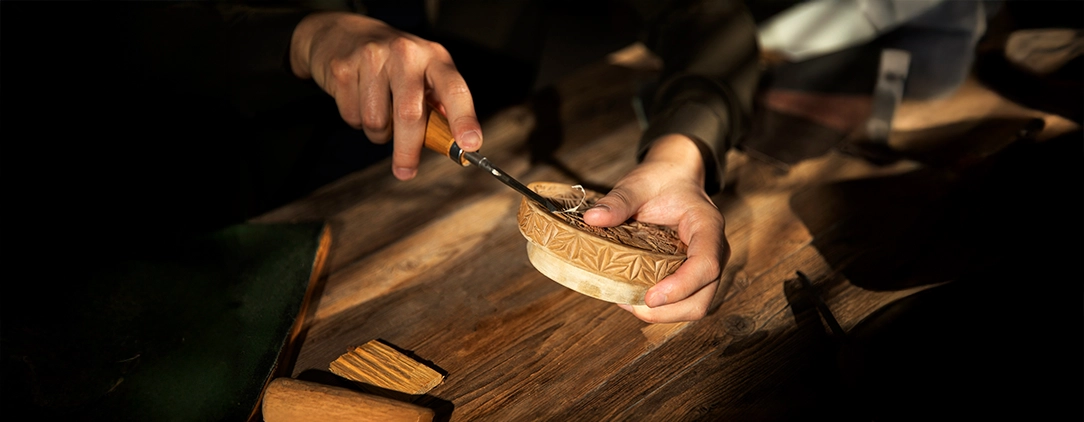
In the northernmost reaches of the country, the intricate craftsmanship of Kashmir tells stories of patience and precision. Intricately hand-designed embroidery and woodcarvings indicate a culture that has been shaped by nature and the effects of time. The craft is more than decor; it represents a heritage through memories that are whispered within families through generations.
Moving to the west, in Rajasthan, the vibrant hues and expressionist methods of the region’s artisans come alive through block printing, pottery, and textile traditions. Here, craft becomes a language of celebration and survival. Patterns narrate folklore, natural dyes echo the landscape, and every piece carries the rhythm of desert life and community resilience.
In Central India, there are art forms that are based on narration and symbolism. Be it terracotta models or some forms of tribal art, these creations reflect a deep relationship with nature and spirituality. Each motif holds meaning — a reminder that art here is not created for markets alone, but for rituals, homes, and collective identity.
In Eastern regions, the attention to detail and use of natural resources in handmade crafts indicate that discipline and continuity are cherished. Whether through weaving or surface ornamentation, artisans preserve techniques refined over centuries. These crafts often remain unseen in mainstream spaces — precisely why Khwahiish exists to bring them into thoughtful visibility.
Moving southwards, the craft traditions of Kerala showcase how functionality can meet beauty. Nature-based materials such as fibers, wood, and metal are shaped into objects of everyday use, guided by sustainability and balance. Here, craftsmanship reflects a way of living — mindful, intentional, and rooted in respect for the environment.
These two regions, along with others, compile the living geography of India’s rich artistic diversity. This diversity is not categorized and reduced to trends at Khwahiish. Each art form is presented with context — honouring its origin, its process, and the people who sustain it. By working directly with artisans, Khwahiish does not allow arts to be uprooted from their roots, but rather preserves and carries them forward with dignity.
Khwahiish is a platform that supports more than 150 artisans from India. This organization can be called the connecting link between rural artisans and their admirers from across the world. This platform provides a chance for the handmade arts of the rural artisans to cross geographical boundaries, yet they get to retain the authenticity of the arts. Artisans are recognised not just for their output, but for their mastery, stories, and cultural contribution.
This Pan-India journey is a reminder that Indian craft is not singular, – it is plural, layered, and alive. Every piece has the voice of a region, the memory of a lineage, and the future of a community.
From Kashmir to Kerala, Khwahiish celebrates craft not as a product, but as a living heritage – one that is worthy of respect, fair support, and a place in the modern home. It is through these deliberate choices and meaningful connections that the map of art continues to evolve, ensuring that the hands that shape India’s heritage are noticed, appreciated, and remembered.
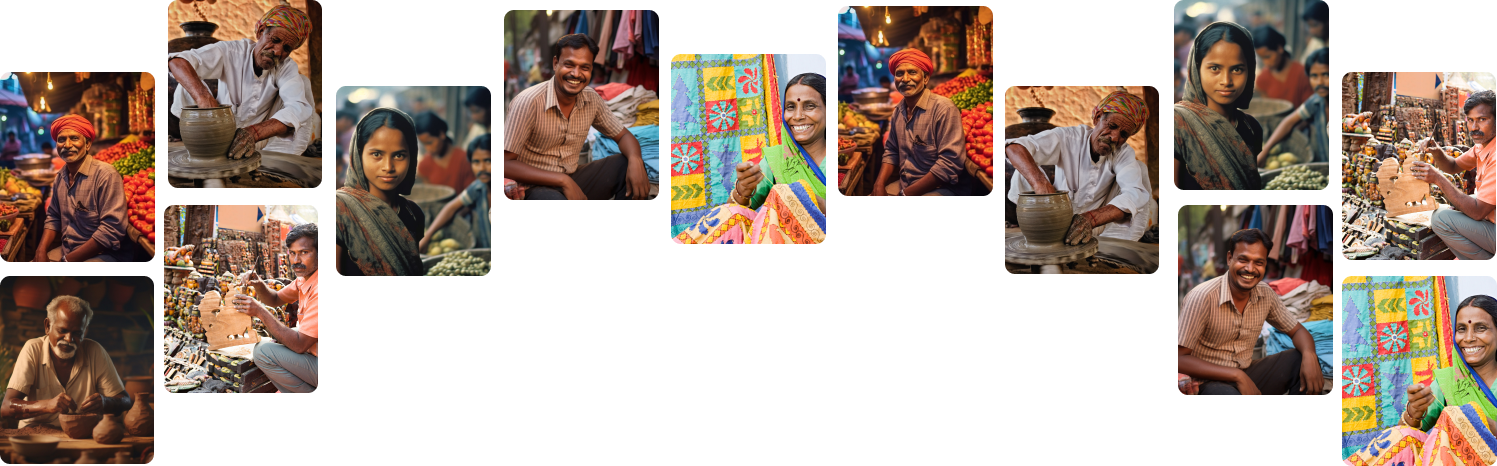
When you support Khwahiish, you’re not just buying handcrafted products — you’re uplifting communities, preserving heritage, and empowering artisans to dream bigger. Whether you’re a conscious shopper, a creative collaborator, or someone who believes in ethical living, there’s a place for you in our journey. Together, we can keep traditions alive and create a future where craftsmanship thrives with dignity.

Start exploring the virtual gallery at your own pace.
Start exploring the virtual gallery at your own pace.

Select required number for manual OTP
Please enter the 6-digit verification code sent on +91 9876543210. This code will expire in 10 minutes
Please enter the 6-digit verification code sent on +91 9876543210. This code will expire in 10 minutes