January 22, 2026

How Your Purchase Becomes a Catalyst for Change

Detailing how a conscious consumer’s choice directly helps communities grow stronger and cultures flourish.

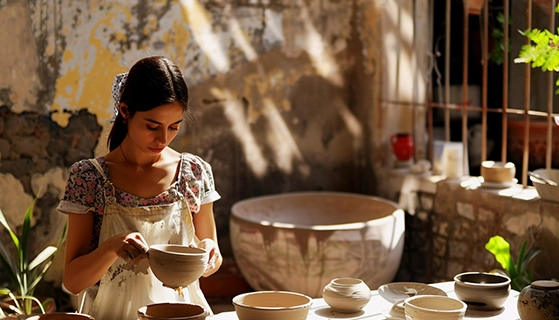
In a world racing towards quick checkouts and temporary trends, the act of buying frequently stops at the checkout. However, at Khwahiish, every purchase is a story that goes beyond the product and into the lives of the people who made it. The decision to choose handmade is more than just aesthetics; it is a conscious choice that has a purpose and a meaning. When you buy with a purpose, you become a part of something bigger than just a purchase.

From choice to impact

Every handmade product at Khwahiish represents the result of hours, sometimes days, of expert labor that has been passed down through generations. Every product has an artisan behind it who has passed down their knowledge through generations. Your purchase is more than just a sale; it is a part of this living and breathing craft chain. This goes on beyond a single purchase. It gives artisans financial security so that they can continue to do what they do best—while maintaining quality and heritage. The decision to choose handmade is what will help make this craft a sustainable living.

Empowering communities through fair support

When artisans are able to earn a steady and respectable income, it has a ripple effect on the entire community. Fair support enables families to access education, health, and improved living standards. It also enables local economies and lessens the need for migration in search of uncertain work.

At Khwahiish, this emphasis on the community enables artisans to ensure that the craft remains embedded in its cultural and geographical environment. Your purchase enables the creation of ecosystems where creativity thrives and communities thrive together.

Preserving living cultures

Craft is culture brought to life. Every pattern, process, and product speaks of a place, a ritual, and an identity. But many traditional forms of art are endangered because of a lack of recognition and appreciation. Conscious consumerism is what will preserve living cultures. Through the support of artisans, knowledge is transferred, apprentices are trained, and heritage is allowed to evolve instead of being lost. Your purchasing power will ensure that craft is not relegated to a trend but is instead treated as a living legacy.
Creating dignity through recognition

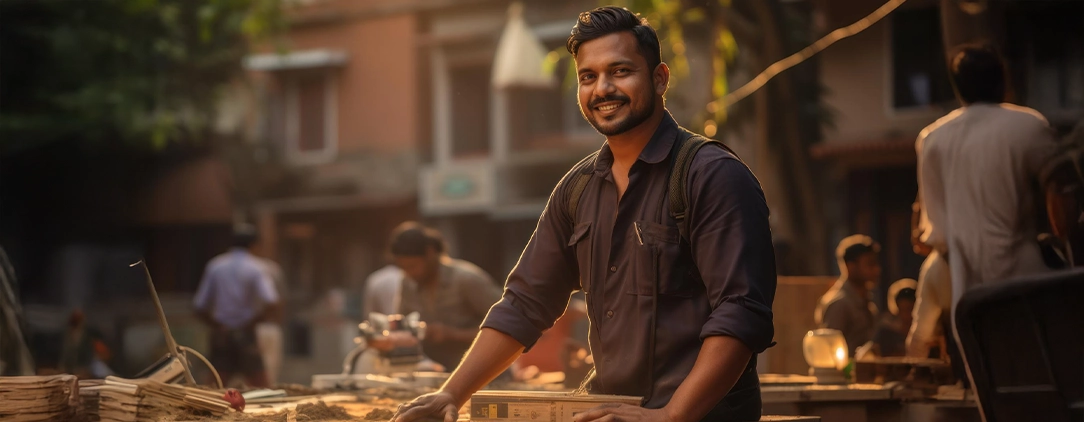
Dignity is one of the most significant effects of mindful consumption. Pride and confidence are restored when consumers select platforms that acknowledge artisans as creators rather than as invisible labor. By elevating their voices, experiences, and identities, Khwahiish honors the people who make the product. Every purchase turns into a recognition of their skill and originality. Transactions become relationships based on respect rather than anonymity when they are acknowledged.

Establishing ethical supply chains

Conventional supply chains frequently place an emphasis on scale and speed, undervaluing artisans. Khwahiish reimagines this system through ethical, transparent practices that prioritise people over profit.
Customers support safe working conditions, direct artisan relationships, and fair trade practices by making purchases through conscious platforms. Together, these decisions oppose exploitative models and promote ethical business practices across all sectors.

A shared responsibility

Change is developed through daily choices; it does not occur overnight. When consumers choose handmade, ethically sourced creations, they contribute to a larger movement that values sustainability, fairness, and cultural preservation. Beyond ownership, you have a responsibility as a meticulous buyer. It involves taking part in a cycle of care that fosters creativity, preserves traditions, and uplifts communities.

The strength of making better decisions

Every purchase made at Khwahiish has a purpose. It fosters meaningful connections across geographical boundaries, supports artisans, and preserves heritage. What you choose to support is reflected in what you choose to purchase.

When you make thoughtful decisions, your purchases act as a catalyst for change, fostering the growth of communities, the flourishing of cultures, and the continued pride in craftsmanship.
January 22, 2026

Preserving the Unwritten: How Traditional Knowledge Survives the Modern Age

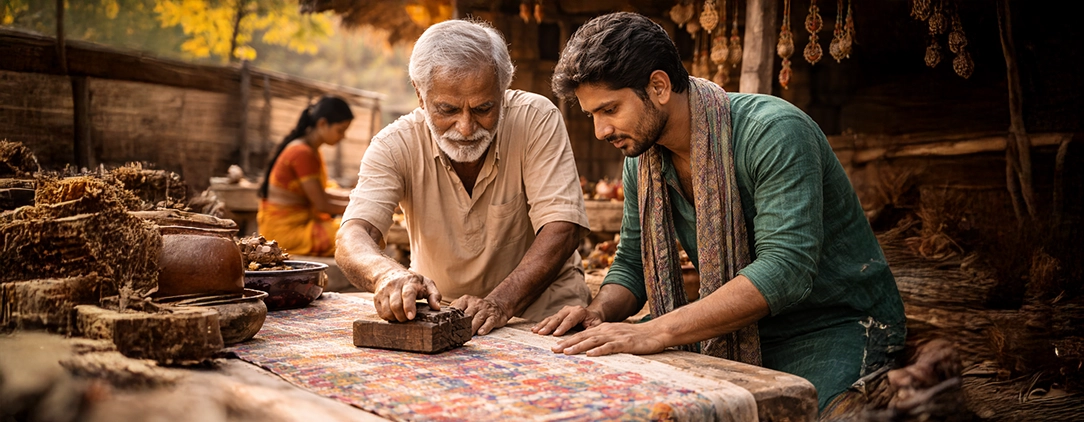
Across India, some of the most valuable knowledge has never been written down. It exists in memory, in motion, in practice – in the beat of a loom, the pressure of a block, the intuitive blending of natural dyes. The traditional skills of crafts are learned not from instruction manuals, but from observation, replication, and trust transmitted from one generation to the next. This unwritten knowledge forms the backbone of India’s craft heritage.
However, in a world driven by the forces of speed, automation, and instant manufacturing, this knowledge is at the risk of being lost.

The fragility of tradition in a fast world

In today’s world, modern systems are designed for efficiency and scalability, leaving little room for slow and deliberate processes. For many rural artisans, this shift has created immense pressure to adapt, simplify, or abandon traditional methods altogether. Younger generations are often encouraged to find faster and more secure ways of earning a living, moving away from traditional practices that require time and patience.
The loss of traditional practices results in the loss of something much more valuable than skills— they erase cultural memory, regional identity, and community wisdom built over centuries.

Why traditional knowledge matters

Traditional craft is more than just a decorative practice; it also holds ecological knowledge, social meaning, and sustainable practices. Natural materials, Natural materials, climate-sensitive methods, and zero-waste processes evolved long before sustainability became a global conversation.
Each technique reflects a deep understanding of land, seasons, and resources. To retain this knowledge is to retain alternative ways of living, ways that are rooted in balance, respect, and long-term thinking.

Learning Through Lineage

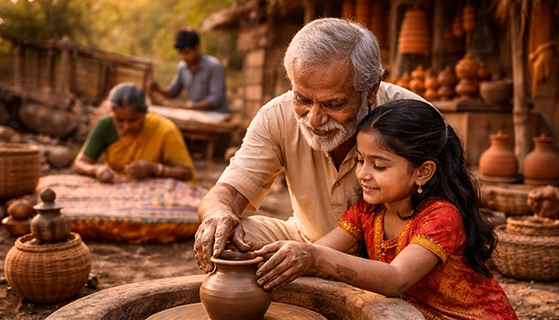
Craft knowledge is not transmitted through an educational structure, but through a lineage. A child learns by observing their parent’s hands, listening to stories during work hours, and practicing movements until they become instinctive. This type of learning is not only about building knowledge, but also about building identity.
When this chain breaks, rebuilding it becomes nearly impossible. Protecting traditional knowledge, therefore, requires supporting the communities that hold it — not extracting techniques without context or credit.

The role of ethical platforms

Preservation cannot exist in isolation. Artisans require platforms that prioritize authenticity over trends and substance over speed. Ethical platforms such as Khwahiish are essential in ensuring that traditional knowledge is sustained through the provision of fair support, visibility and long-term opportunities to the artisans.

Bridging the past and the present via storytelling

Storytelling is one of the most effective methods of preservation. When people are aware of the story that goes into the making of a craft, they start to appreciate it in a different way. Storytelling gives objects a meaning. At Khwahiish, the art of storytelling ensures that traditional knowledge is not divorced from the hands that practice it. Storytelling enables ancient knowledge to speak in a new language without losing its soul.

Modern support for ancient wisdom

Conserving the unwritten does not mean opposing progress but rather incorporating tradition into the present in a thoughtful manner.  Digital platforms, ethical commerce, and conscious consumers can work together to build a space where traditional knowledge flourishes rather than fades. When artisans are provided with a steady income and are treated with dignity, they can take the time to teach the next generation. This continuity ensures that techniques are not rushed or diluted to meet fleeting trends.

A shared responsibility

The preservation of traditional knowledge is not the sole responsibility of the artisan. It is a collective responsibility that falls on the shoulders of the creators, the platforms, and the consumers. Every deliberate decision, every handmade item that is valued over mass-produced ones, is a step towards preservation. With every decision that we make to choose craft over other options, we are choosing to preserve knowledge that cannot be replaced once it is lost.

Keeping the unwritten alive

The survival of traditional knowledge is not about archiving it but about practicing it, respecting it, and transmitting it. In today’s fast-paced world, the decision to choose slow craft is an act of care. For Khwahiish, keeping the unwritten alive means standing with the artisans, respecting their knowledge, and making sure that the knowledge that is in their hands is allowed to live.

January 22, 2026

Voices of the Village: A Day in the Life of a Traditional Artisan

Sharing first-person perspectives on how reaching a global audience provides hope and preserves heritage.

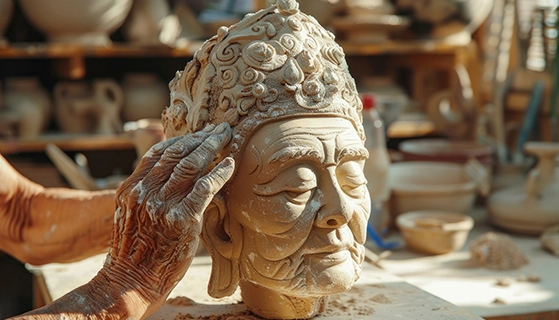
The day starts before the sun is fully up. In a quiet village, where familiar sounds and rhythms fill the air, hands are preparing for work that has been passed down through generations. This craft is not new — it was learned by watching elders, by practising patiently, by repeating motions until they became memory. For many traditional artisans, home and workspace are the same. The tools are simple, worn with age, but full of skill. Every day is the continuation of a story that has been unfolding for a long, long time- one shaped by heritage, resilience, and pride.

Midday: crafting with patience and purpose

As the day progresses, the beat of creation takes over. Each item demands attention and dedication – no shortcuts, no hurrying. There are no take-backs, and that is what makes the craft so special. It is not about speed; it is about intention. For the artisans, this is more than just a job. It is about who they are, where they come from, and what they believe in. However, for many years, creators worked without recognition — selling their pieces locally, often underpaid, often unseen. The value of their labour was measured only by necessity, not by skill.

When the world begins to notice

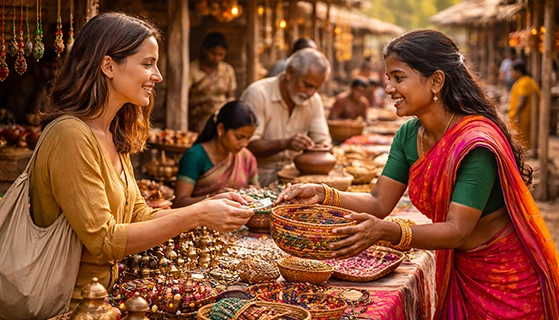
The thought of someone, somewhere, noticing and appreciating this work was always unimaginable. Reaching the world was never a part of the plan. Survival was. But when platforms like Khwahiish create direct connections between artisans and conscious buyers, something changes. A product made in a remote village suddenly has a home in another country. The maker is no longer faceless. There is a name, a story, a voice behind the product. It is no longer just a source of revenue; it is a source of hope.

Evening: the meaning of fair support

Fair support brings stability. With it, artisans can look beyond tomorrow. They can send children to school, upgrade their tools, and pass down their traditions without worrying about them fading away. Fair income does not undermine tradition; it safeguards it. It gives artisans the freedom to choose, to be proud of what they do. When artisans are treated with respect, their craft is no longer a sacrifice but a sustainable tradition.

Preserving heritage through connection

Reaching a global audience does not mean losing heritage. In fact, it enhances it. When consumers are able to connect with the heritage of a piece, the value is not only enhanced but also preserved. This is how heritage is preserved in its true form. It is preserved by allowing it to evolve with respect, rather than freezing it in time. The artisans are able to stay connected with their heritage while being a part of the larger world.

Night: craft as hope for tomorrow

As the day ends, the hands rest — tired, yet fulfilled. There is solace in knowing that the work of today has value beyond the village. That somewhere, someone will hold this piece and understand its worth. For traditional artisans,  hope is not a loud voice. It is a quiet one that resides in continuity — in the ability to continue making, to continue teaching, to continue believing that what they do has value.

Stories that deserve to be heard

Every day for the artisans at Khwahiish is a testament to the fact that heritage exists in the people. By giving the artisans a voice, a platform, and an audience, Khwahiish ensures that these stories are not silenced. Because when we listen to the voices of the village, we do more than preserve a craft – we sustain a culture, a dignity, and a hope.

January 22, 2026

The Art of Slow Living: Why Handmade Beauty is Gentle on the Planet

Promoting “beauty that lasts” as a conscious alternative to disposable trends.

In a world that celebrates speed, convenience, and consumption without end, beauty has increasingly been reduced to disposability. Trends come and go in a.cycle of twenty-four hours, commodities are replaced in a matter of months, and the environmental cost of “fast” living continues to rise. Slow living offers a different rhythm — one that values intention over impulse, quality over quantity, and connection over convenience. In Khwahiish, slow living is not a lifestyle trend. It is a philosophy rooted in craft, care, and consciousness.

Handmade as a Philosophy, Not a Product

Handmade beauty begins long before an object reaches a home. It starts with thoughtfully sourced materials, time-honoured techniques, and skilled hands that work at a human pace.  It is in contrast to industrially produced objects because handmade objects are never hurried along, but instead shaped with patience, precision, and purpose.
This deliberate pace prevents waste, conserves energy, and prevents overproduction. Each item is made to last, not to be replaced. When we choose handmade, what we’re choosing is fewer, but better.

Beauty That Lasts, Not Trends That Fade

Fast trends are driven by the concept of disposability. Slow living, on the other hand, is all about the joy of longevity. Handmade pieces are designed to age gracefully — gaining character, meaning, and memory over time. At Khwahiish, beauty is not defined by what is new, but by what endures. A handcrafted textile, a thoughtfully made décor piece, or a traditional artwork carries cultural depth and emotional value. These are pieces that remain relevant beyond seasons — becoming part of a home’s story rather than clutter within it.

Gentle on the Planet, Rooted in Nature

Handmade craft is inherently sustainable. Many traditional art forms rely on natural fibres, locally sourced materials, and low-impact processes refined over generations. These methods work with nature, not against it.

As Khwahiish avoids large-scale production and chemicals, the carbon footprint of handmade crafts is reduced drastically. Sustainability at Khwahiish is not just a value added; in a way, it comes with the process of crafting itself.

Mindful Consumption Creates Meaningful Impact

Slow living encourages us to make conscious choices. When we stop for a second before buying, we start asking other questions:
Who made this?
How was it created?
Will it last?
Choosing handmade means ethical livelihoods, preservation of cultural heritage, and reduction of wastes. Each conscious purchase becomes an act of responsibility-one that values people, planet, and process equally.

Craft that Respects Human Hands

Sustainability is not only about the environment — it is also about people. Handmade beauty supports artisans who work with dignity, skill, and pride. Slow craft allows creators to work in safer environments, at humane paces, without being pressured to produce endlessly. At Khwahiish, it’s not invisible labor. It’s creators whose knowledge and skills come into play in every product made. It’s artisans who deserve support for handmade products because it’s a livelihood that is made sustainable for future generations.

A Home That Reflects Conscious Living

Slow living is extended to our homes. Handmade pieces bring warmth, texture, and authenticity into living spaces. They invite us to live with fewer objects but deeper meaning. A home filled with intentional choices becomes a reflection of values: sustainability, care, respect for tradition. Handmade beauty does not shout for attention; it silently belongs.

Choosing a Slower, Kinder Future

The art of slow living reminds us that to be relevant, beauty does not have to be hurried. It takes time to be created, appreciated, and preserved. At Khwahiish, handmade beauty is a conscious alternative to disposable culture. Gentle on the planet, respectful of human effort, and rooted in traditions honoring balance. We choose lasting beauty by choosing slow, nurturing the earth, uplifting communities, and creating spaces filled with purpose.
Because when beauty lasts, impact does too.

January 22, 2026

The Hands That Shape Heritage: Why We Call Our Makers “Creators”

Focus on the brand’s vision that artisans are more than just “makers”. This post would explore the deep mastery, resilience, and identity embedded in their workDiscussing the dignity of creative labor and the transition from rural roots to global recognition.

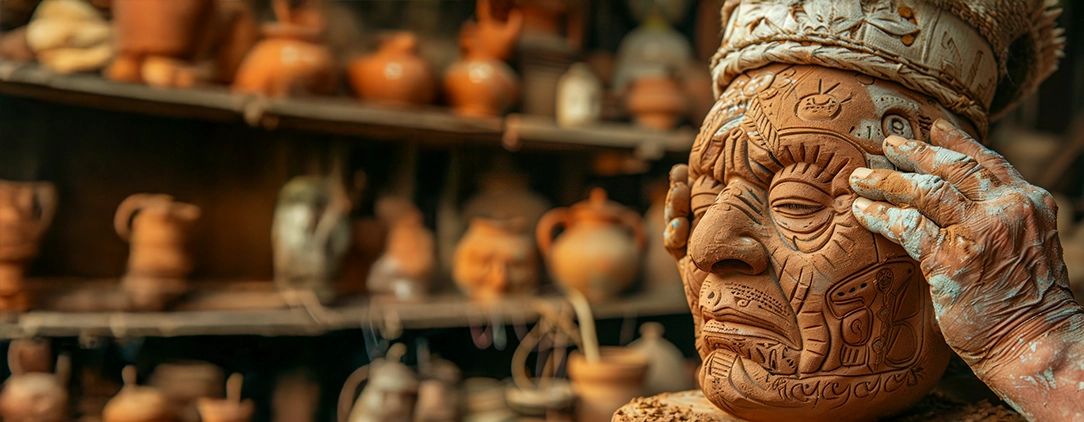
In a world where speed, automation, and mass production rule, the label ‘maker’ carries a certain transactional tone. Output, efficiency, and repeat business come to mind when ‘maker’ is used as a label. At Khwaiish, we prefer the title ‘Creator.’ Because the hands that shape heritage are doing far more than making objects, they are preserving culture, keeping memories alive, and creating meaning.

Beyond Making: The Soul of Creation

Each handmade item is the product of a process that begins long before the initial stages involving raw materials and hand. It begins with knowledge transferred through generations, skill development through patience, and familiarity with form, function, and history.
A block print artisan doesn’t just stamp patterns on fabric.
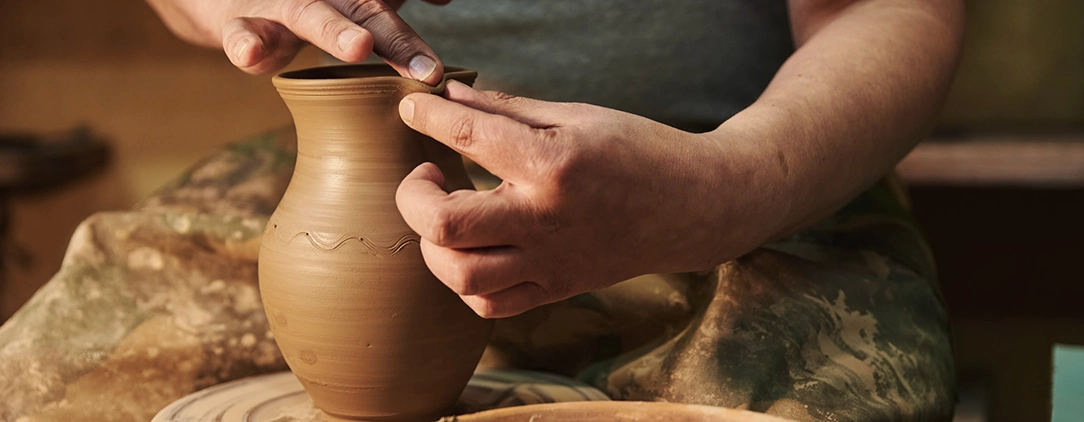
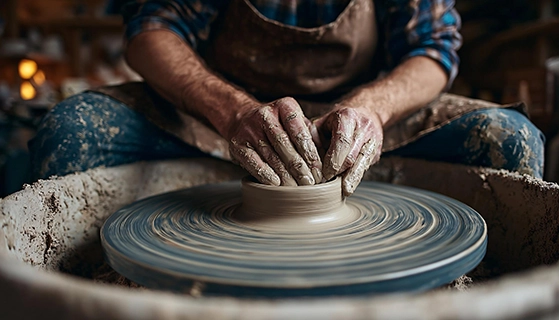
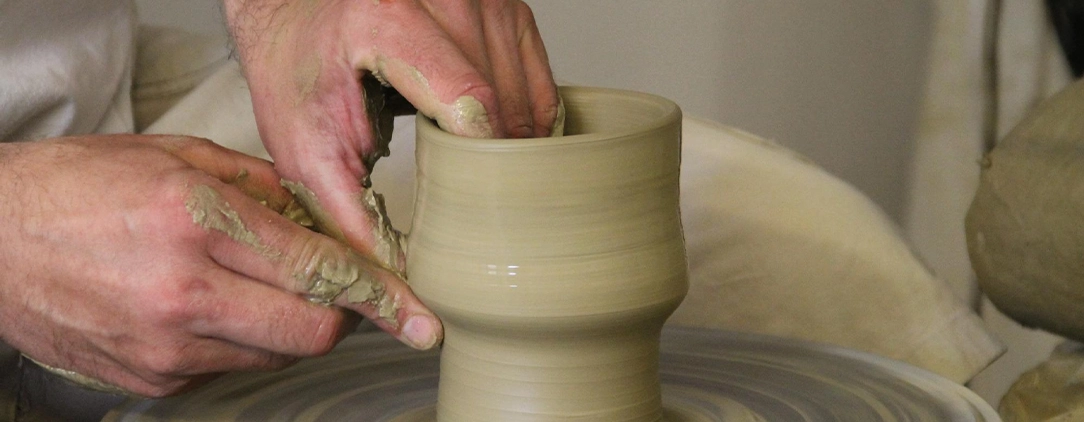
A potter doesn’t simply shape clay.
A weaver doesn’t merely interlace threads.

In fact, they produce out of the collective knowledge of experience, culture, and expertise inherited over the ages. To call them “makers” would be to reduce their work to output. To call them “Creators” is to honour the intellect, emotion, and resilience embedded in every piece.

Craft as knowledge, not just a skill

Traditional craft is frequently misunderstood as some form of manual labour. The truth is, it is a dynamic knowledge system.
Creators carry:

  • An understanding of materials shaped by geography
  • The techniques honed after years, even decades, of experience.
  • Cultural symbolism embedded in motifs, colours, and forms

This knowledge isn’t recorded in textbooks. Rather, it resides in hands, memory, and practice, where it has been transmitted through the ages. At Khwaiish, we believe that craftsmanship isn’t a nostalgic concept—it’s intelligence shaped by time.

The Dignity of Creative Labour

Rural artisans have long hovered on the periphery of recognition – their craft IS appreciated, but their names are in danger of being forgotten. We believe dignity is found not only in fair wages, but in recognition, in the right to speak, and in respect. “Creators” is a deliberate title because:

  • It indicates authorship
  • It restores agency
  • It prizes creativity, not merely commerce.

Each and every Creator we work with is a cultural contributor – not a supplier, not a background player, but an essential element in the narrative of craft itself.

From Rural Roots to Global Homes

Most creators start their journeys in a small village – a setting with a strong tradition but limited possibilities.
Their craft is influenced by:

  • Local landscapes
  • Community Rituals
  • Family Lineages

But their creations must have a space that transcends geographical limitations. That’s where Khwaiish comes in as the facilitator in this journey from an earthy background to international acknowledgement. We put creators in touch with an audience who appreciates all things authentic and human. When a product of human craftsmanship finds a place across borders,  it carries more than beauty. It carries identity, pride, and continuity.

Creation as Resilience

Behind every crafted piece is a backstory of persistence. Creators have had to adapt to fluctuating markets, depleted resources, and dwindling interest across generations-all while safeguarding techniques that are at risk of disappearing. Continuing a traditional craft today is an act of tenacity. It’s a decision to salute the past while building a sustainable future. As we support creators, we make certain that craft will keep on living, changing, and applying itself to life rather than being frozen in time.

Why this matters to you

When you buy a Khwaiish creation, you are not only buying something tangible, but you are also:

  • Supporting ethical, transparent livelihoods
  • Valuing human creativity over mass production
  • Becoming part of a bigger story about cultural preservation

You help creators rise with dignity, not as anonymous makers, but as recognised artists of heritage.

The Khwaiish view

At Khwaiish, every creation is a collaboration between the hands that shape it, the traditions that inspire it and those who choose to preserve it and protect it. This is why stories matter, and this is why we call our artisans “Creators”.Because heritage is not made; it is created, carried, and shared.

Search for products (0)

Back to Top
Product has been added to your cart